
ABOUT / OUR FUNDER
Richard A. Busemeyer
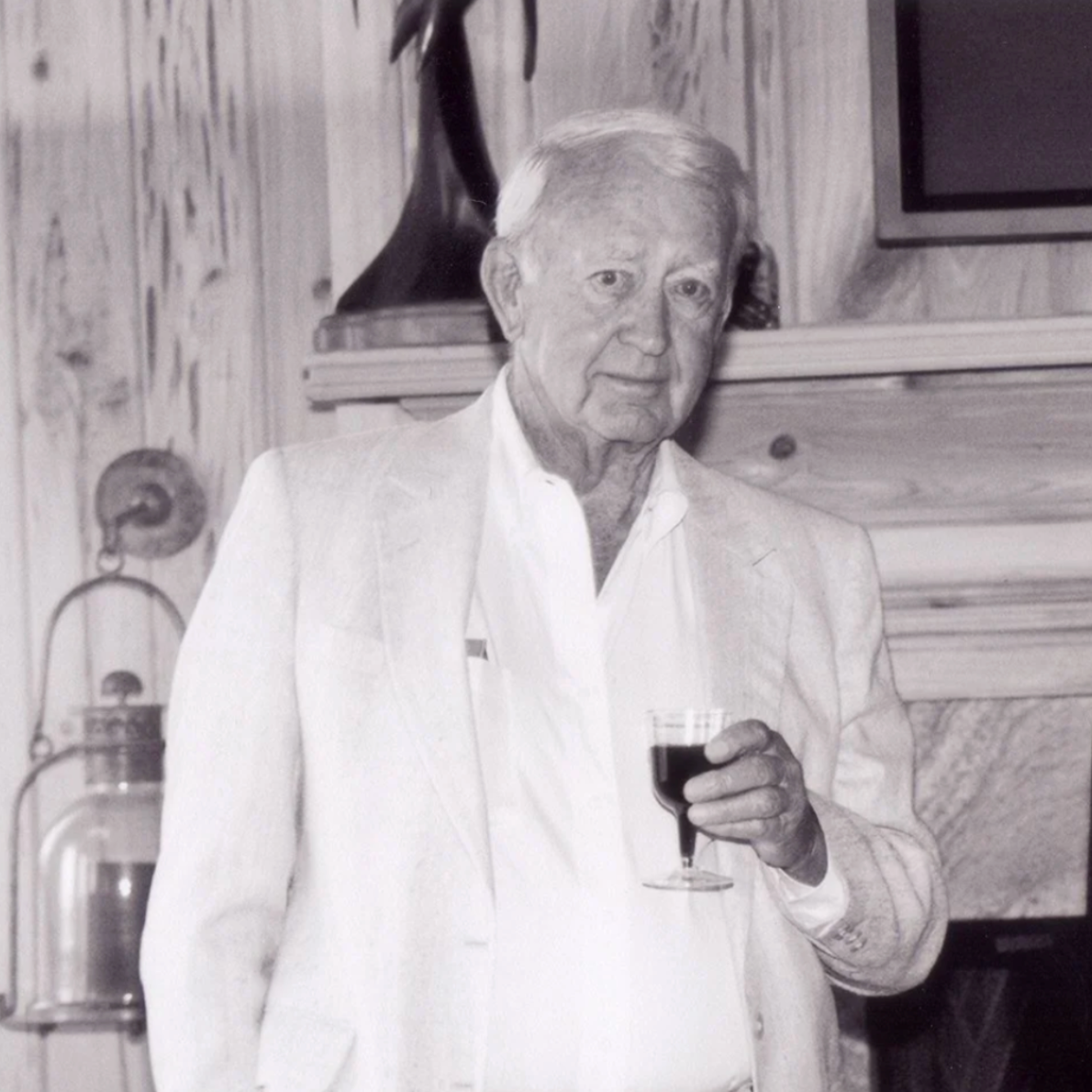
Richard A. Busemeyer (1924 to 2006)
Born in 1924 in Cincinnati, Ohio, Richard A. Busemeyer established this foundation in 1992. He intentionally included “Atheist” in the name to push back against the assumption that non-believers cannot be humanitarian. In his autobiography he wrote: “I did so only to show that atheists don’t have horns, and that they can be humanitarian.”
On his death in 2006, the foundation inherited his entire estate. It continues to deploy capital into organizations and ideas he believed in.
A LIFE OF QUESTIONING
Richard was the eldest of ten children in a devout Catholic family. His parents sent every child to Catholic schools through the Depression, sacrifices the family could barely afford but made anyway.
He served as an officer in the Army during World War II, returned home in 1946, and shortly after met Marjorie at a dance at Xavier University. They married in 1948 and raised ten children of their own, all baptized and educated in the same Catholic tradition Richard had been raised in.
Sometime in the late 1950s or early 1960s, his belief began to give way. As his children moved through school, he proposed pulling them out of Catholic schools and sending them to public school. Marjorie resisted; they compromised. The younger children moved to public school but were required to attend CCD and Sunday Mass.
By the early 1970s, Richard had broken with the church entirely. In 1971, he published a letter to the editor titled "Stop Praying," a public declaration that reverberated through his family, his community, and his church.
ESTABLISHING THE FOUNDATION
In 1992, Richard established the Richard A. Busemeyer Atheist Foundation. The name was deliberate. He believed estates should not pass intact from generation to generation, and he wanted his capital to do work in the world rather than sit in family hands. On his death in 2006, the foundation inherited his estate and began deploying it.
IN HIS OWN WORDS
-
“As the discussions progressed, I discovered more and more that no one could assuage the increasing doubts that I continued to have regarding the Catholic liturgy, the dogma, the history including the professed authority of the Pope to make decisions regarding faith and morals and which are to be followed without question. No one in the group could ever explain the meaning of Bible passages that made any sense. Questions concerning the church's apathy regarding racism, bigotry, poverty, hate, homosexuality, birth control, abortion and a myriad of other subjects could never be answered to my satisfaction. Eventually, I concluded that unless one continued with “blind faith” in the Catholic church and in religion as well as the belief in a supreme being and creation, you simply had to think and act in another direction. Once there's doubt, it all falls apart.”
“In what was pretty much of a last-ditch effort to bolster my constantly waning religious beliefs, I agreed to attend a week-end religious exercise called the "Cursillo". This bordered on the "born again" idea with high powered sermons, meditations, prayers, reflection, repentance, self-denial and reaffirmation. I did my utmost to allay all my doubts and to renew my early convictions as to what I had been taught, but to no avail. My fervor was gone. I no longer believed.”
In his book he talks about reactions to a letter to the editor he wrote titled ‘Stop Praying’ which was published November 16, 1971:
“What happened to this good family man, who used to go to church every morning, not just on Sundays? Did the guy who read at the Mass on Sundays have a nervous breakdown? Has he lost his mind and gone berserk? Most of these people had to know that I was having doubts about religion, but never did they expect that I would make a public announcement to that effect. Little did they realize that this had become the culmination of a whole life of doubts and unresolved questions that had finally erupted. This kind of thing doesn't just happen overnight. The truth is that it rarely happens at all. That early Catholic brainwashing is almost impossible to overcome. There are those who become lukewarm to it all and who don't abide by it, but rarely do they come to the place where they disavow it all. None of my 9 brothers and sisters have ever rejected outright their Catholicity. None of Marjorie's relatives, none of our friends, no one else that we ever knew had ever done so. To this very day, none of these people have ever actually publicly disavowed their Catholic religion. There may well be those that have, but I certainly have no knowledge of it, if they have.”
“That first letter to the Editor was a stimulating experience, given all the adverse reaction that I received. Since that time, I have written and had published hundreds of letters on just about every subject from religion to dogs and cats. It's a very uplifting experience, gets the monkey off the back and just might occasionally be instrumental in getting another person to think a little differently. As the years have gone by, I have never had any regrets about either my attitude concerning religion or about my decision to go public with it. I'm more convinced than ever that religion is at the base of most of our individual and our world unrest. My own children have been able to decide for themselves if and what they want to believe and to act accordingly. Some of them are Atheists, some are Agnostics, some continue as Catholics and others have either joined some other sect or they are apathetic toward the entire matter.”
“How many of us ever get beyond the things that we were taught as children, the Bible stories, the religious conceptions, the dogma that was imposed indelibly on our spongy minds? How many of us ever come to the place where we decide to analyze all the things passed on to us and then to decide for ourselves how much of it makes sense and what we want to continue to believe is true? Not many.”
“After having been born into a very Catholic family and, after having gone through 12 years of Catholic education, I found that it was no easy decision to break away from all that, to reject it and then to decide for myself what I believe and what I want to project to my family and to the world.”
A FAMILY LEGACY
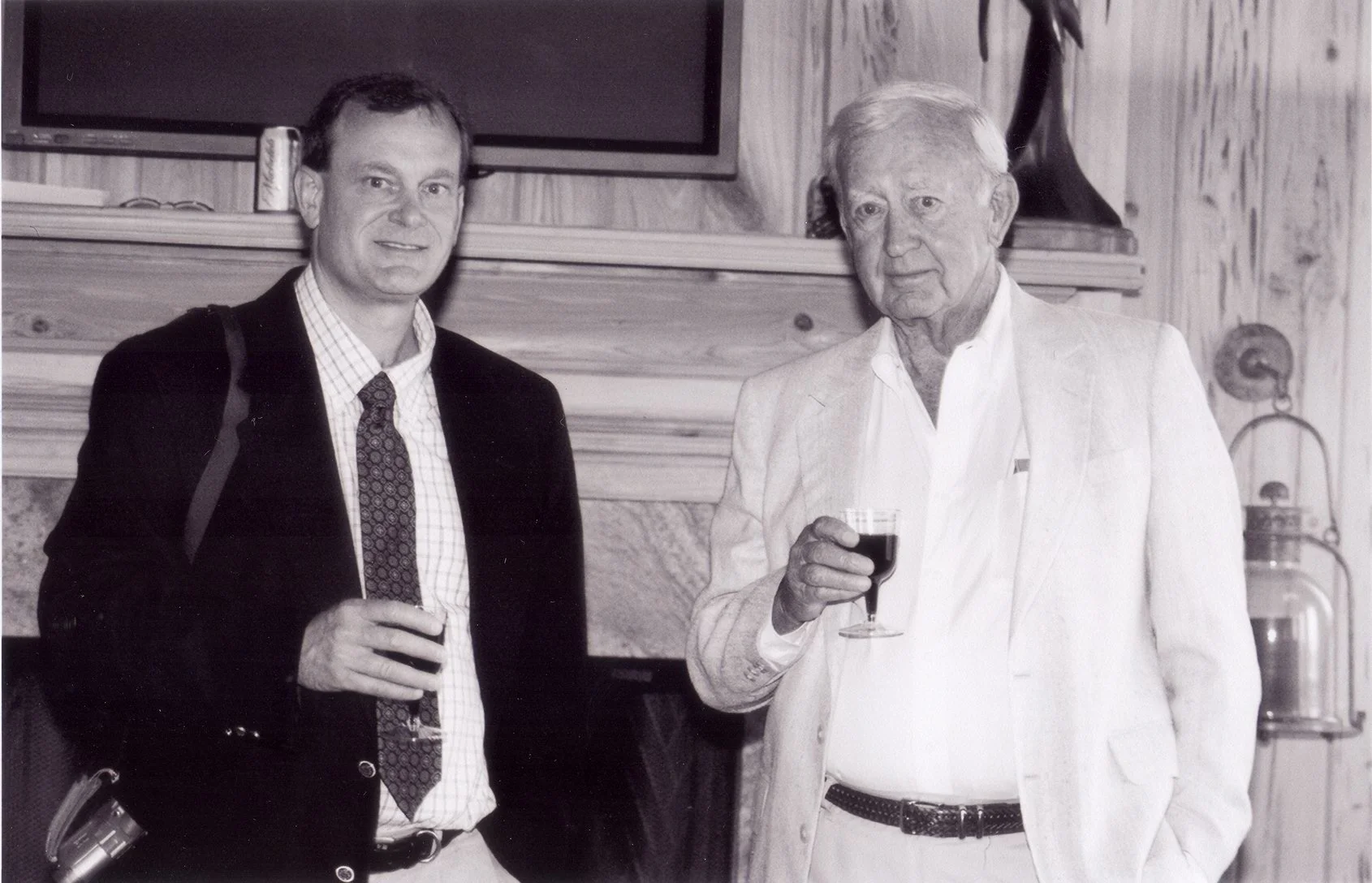
Since Richard's passing, his youngest son Dan has carried forward the foundation's work. He served as President from 2006 to 2022, and now chairs the Board. The third generation of the family now leads day-to-day operations.